This post was written by Arthur Ball on September 29, 2010
This entry was posted
on Wednesday, September 29th, 2010 at 8:07 am and is filed under Uncategorized.
You can follow any responses to this entry through the RSS 2.0 feed.
You can skip to the end and leave a response. Pinging is currently not allowed.
http://twitter.com/elgoatsucker Drake
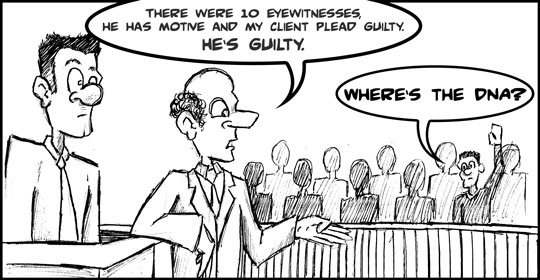
what a shitty lawyer, calling his own client guilty. also, this isn’t a good example of the “csi effect” since in this case, dna is completely unnecessary, what with the 10 witnesses and confession of guilt. also, jurors can’t ask questions like that in court. their decisions are meant to be based on the provided evidence, not the evidence they think should be there even when it doesn’t matter.
Agree or Disagree: 00
Cell
I love that I found this. I’m doing a research paper for my English class and this fits it to a T. Of course a jury will occasionally acquit a case because forensic science isn’t present. Even with all other evidence points in one direction.
Agree or Disagree: 00
http://www.facebook.com/people/Robert-X-Factor-Greenhall/609779598 Robert X Factor Greenhall
You might not fully understand what the CSI Effect is.. The point is that sometimes defendants “get off” bc of a lack of dna evidence despite the fact that all other evidence points to that person. therefore, this would be an accurate representation of a possible consequence caused by the csi effect. You are correct that a juror should not ask this in court, BUT there have been times when jurors have asked for evidence that was not presented.. this they can do. There have been times when jurors have asked why certain procedures were not done- this is acceptable. And your last sentence essentially goes to show what the csi effect is all about!
This entry was posted on Wednesday, September 29th, 2010 at 8:07 am and is filed under Uncategorized. You can follow any responses to this entry through the RSS 2.0 feed. You can skip to the end and leave a response. Pinging is currently not allowed.